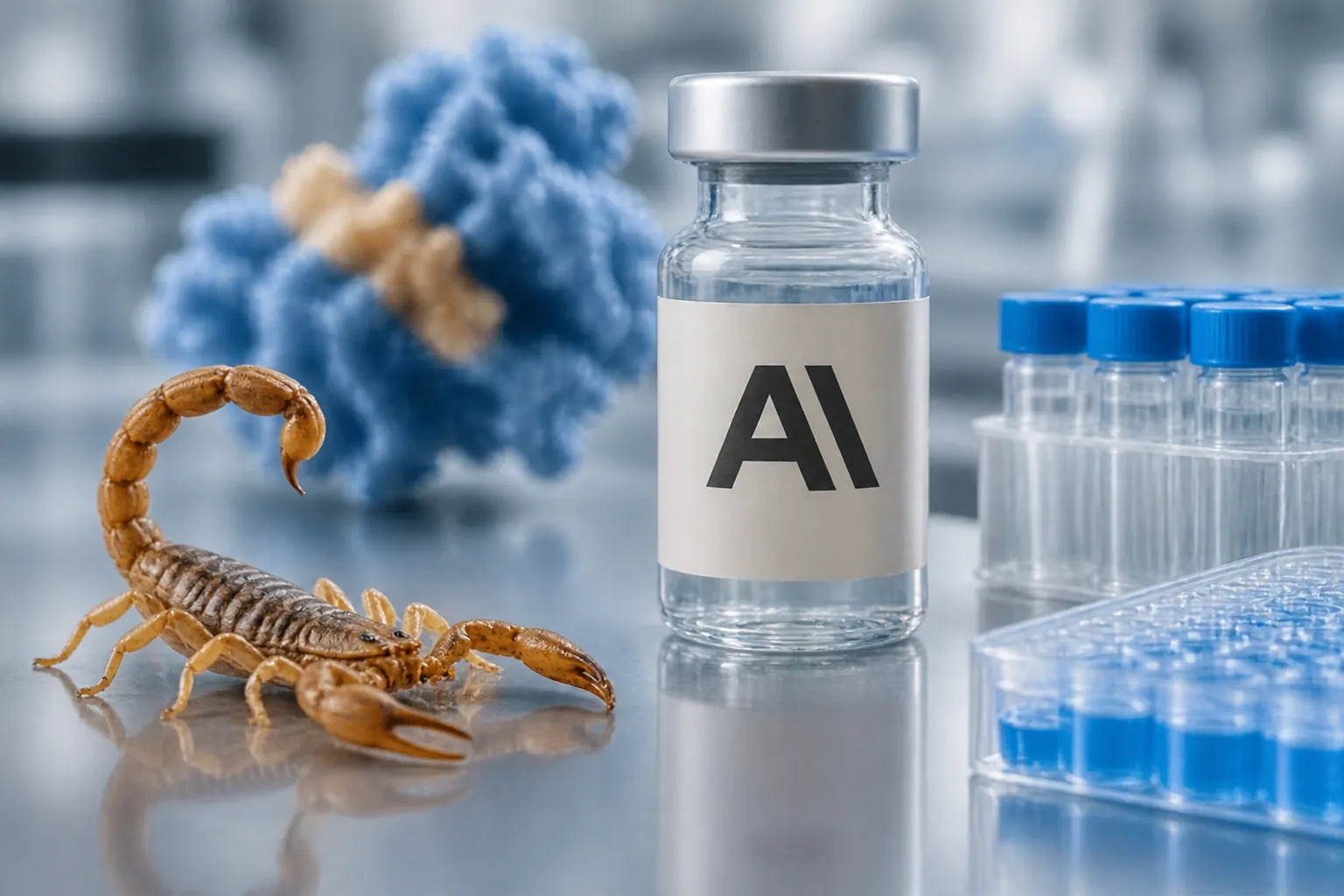
Claude designs 17 lab-confirmed scorpion toxin binders
Anthropic says an internal research model designed 17 lab-confirmed protein binders against scorpion neurotoxins in a largely autonomous 64-hour campaign, a concrete test of whether AI can accelerate neglected-disease discovery.
Anthropic reported that an internal research model, operating inside Claude Science, ran a largely autonomous de novo protein design campaign against scorpion neurotoxins, producing 17 experimentally confirmed binders.
The campaign began with a question from Citrini Research, a financial investment research firm, about whether AI drug discovery could let motivated nonexperts tackle a real health problem. Anthropic's life science team brainstormed targets with Claude and settled on binders against scorpion neurotoxins, with eventual antivenom as the aspiration. Scorpion stings affect at least 1.2 million people a year and cause more than 3,250 deaths, mostly among children with limited access to care — a profile Anthropic describes as a neglected tropical disease.
Working from one prompt adapted from Anthropic's August binder study plus four follow-ups, the model ran for 64 hours, generated 318,484 designs and selected 180 for testing; the team added 31 more with Claude's help. Contract research organizations Adaptyv Bio and Twist Bioscience tested all 211, and 17 met Anthropic's binding criteria. Claude also analyzed the data, produced figures and drafted the report under supervision. All 211 designs and their data are being released.
Anthropic is explicit about the limits: it has not confirmed that the binders neutralize venom in a cellular environment and does not claim an antivenom. Outside reviewers Susana Vázquez Torres and Timothy P. Jenkins called it a promising first step, with Vázquez Torres noting that binding "is no longer the main bottleneck" — the harder work lies further down the therapeutic pipeline.